|
1
|
- Scope
- Instrumentation – eluants, injectors, columns
- Modes of HPLC
- Partition chromatography
- Adsorption chromatography
- Ion chromatography
- Size exclusion chromatography
|
|
2
|
- HPLC
- Most widely used separation technique
- Broad applicability – organic & inorganic
- Can be very sensitive, accurate & precise
- Suitable for separation of nonvolatile species
- Has found numerous uses in industry, clinical settings, environmental
areas, pharmaceuticals, etc.
|
|
3
|
|
|
4
|
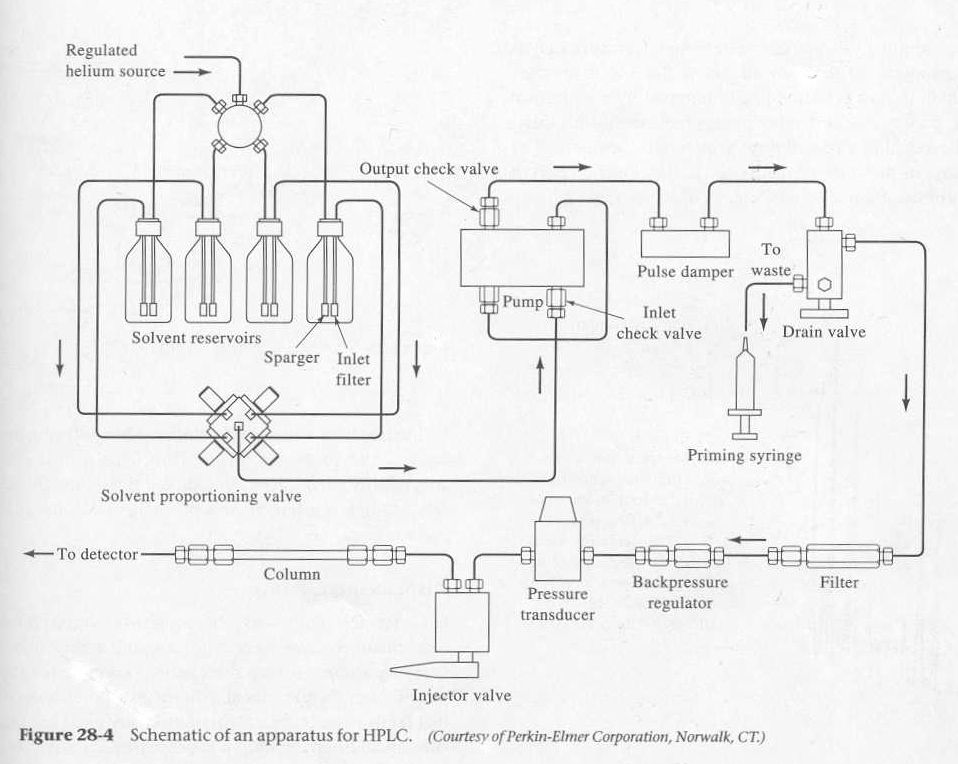
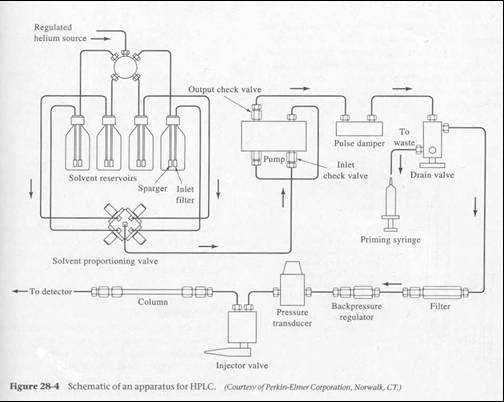
- Solvents (mobile phase) – are stored
- in special reservoirs connected to the
- pumping system – must be free of
- particles that can clog components & free of
- bubble forming gases that get trapped in
- column or detector
- Three basic ways to degas solvents
- 1) vacuum or suction filter (0.4 or 0.2 µm)
- 2) ultrasonicate (with vacuum)
- 3) He purge (sparge units often built in)
- Can purchase HPLC solvents & water - still
|
|
5
|
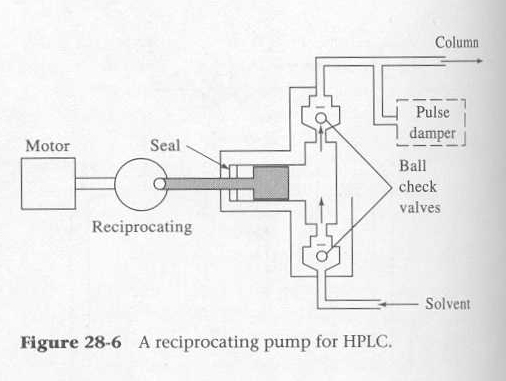
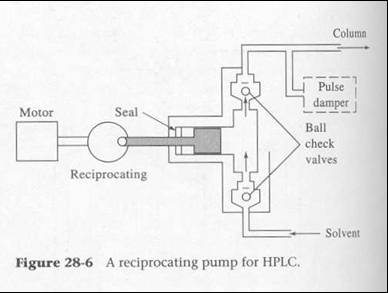
- HPLC pumping systems typically
- employ two reciprocating or
- piston pumps
-
Check valves
-
& pump seals
-
need to be
-
replaced
-
Pulse-free
-
flow is never
-
really
-
achieved
|
|
6
|
- In GC the analyte affinity for the column is influenced by temp
- In HPLC the solvent strength affects an analytes
retention on column
- Therefore, analogous to temp programming in GC, do solvent programming
in HPLC
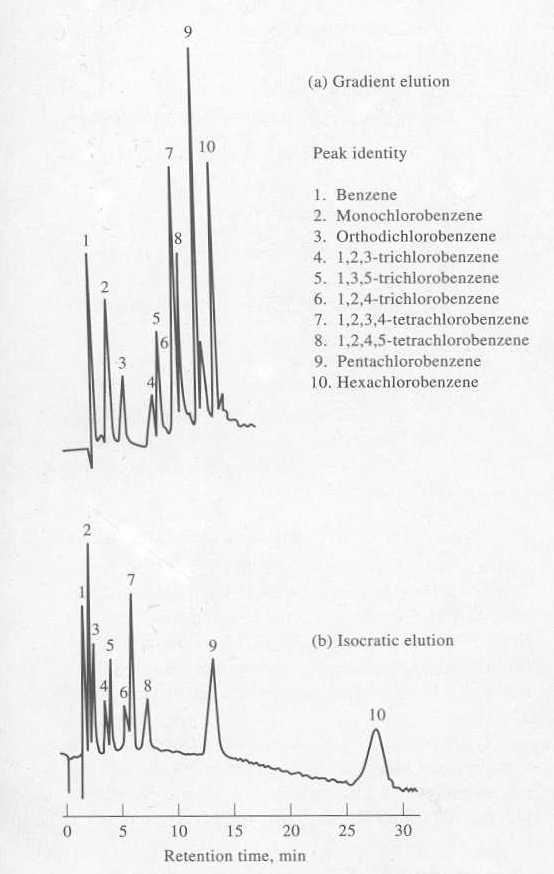
- This is also referred to as gradient elution
|
|
7
|
- Gradient elution dramatically improves the efficiency of separation
|
|
8
|
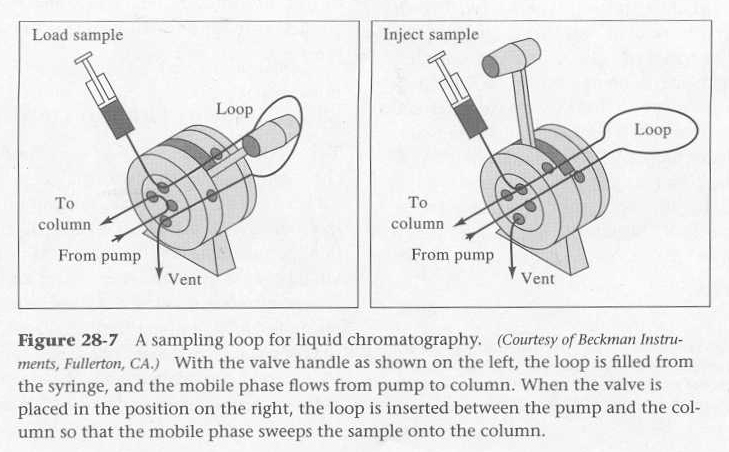
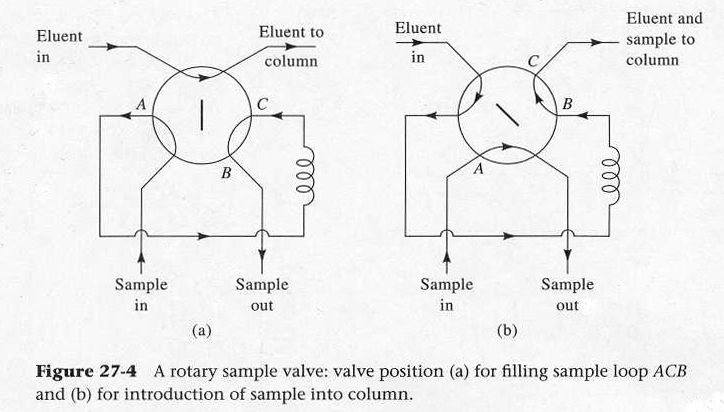
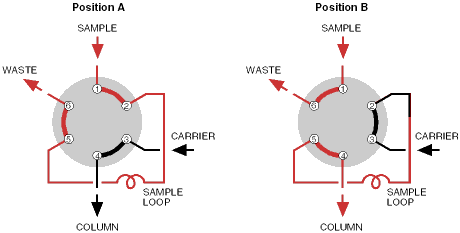
- HPLC sample injectors are
exclusively 6 port valves that are overfilled
by syringe giving
extreme accuracy & precision – typical volumes are 10 to 50
µL but can be larger
|
|
9
|
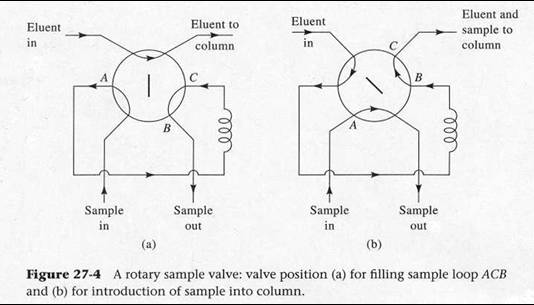
- Rotary Injection Valve
- Common for HPLC, rare in GC
|
|
10
|
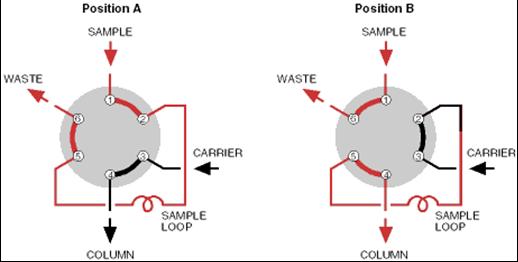
- Injector for HPLC
- 6 port rotary valve
|
|
11
|
- Columns
- usually stainless steel
- can be PEEK (poly ether ether ketone)
- may cost $200-$1000 packed
- Length 10-30 cm, ID 4-10 mm
- Packings are 3, 5, or 10 µm particle size
- Most common 25 cm, 5 µ, 4.6 mm ID
- N = 40,000 to 60,000
- Normally packed under 6000 psi pressure at factory as a slurry
|
|
12
|
- Guard columns are normally used before the analytical
column to protect &
increase lifetime of
column – operator usually slurry or dry packs short guard column
regularly with same or similar packing used in analytical column (old
column material) – can purchase guard systems, cartridges, etc.
|
|
13
|
- Detectors for HPLC
- Ideal characteristics same as GC
- Exception is temp range
- Low dead volume 1 to 10 µL
- Most common detector is UV-vis absorbance detector
- Three types
- 1) Filter instrument – optical
filters, Hg lamp
- Variable wavelength – monochromator
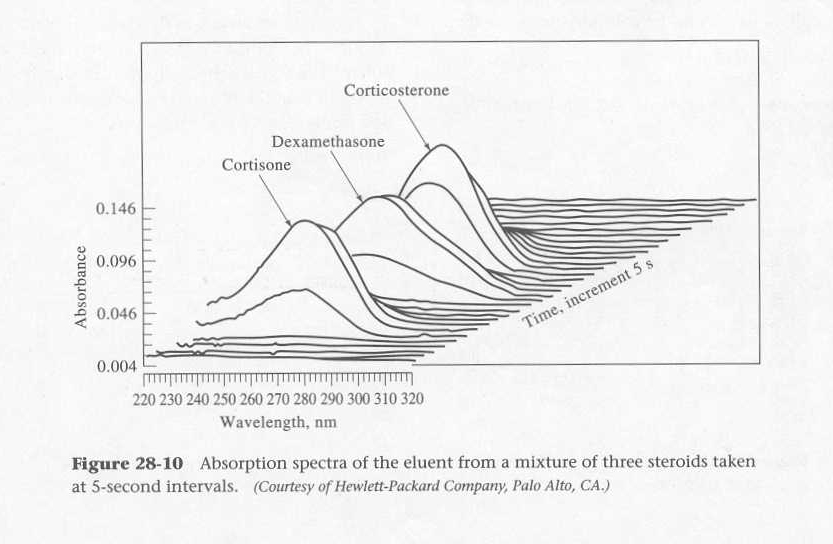
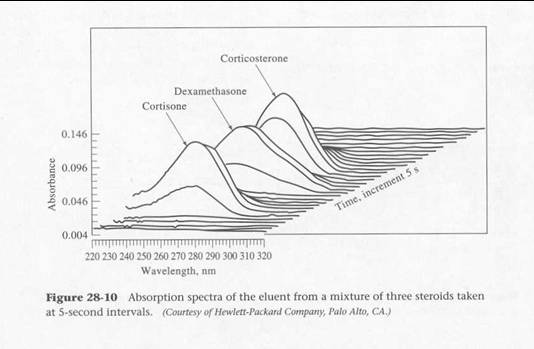
- Diode array detector- provide spectra
|
|
14
|
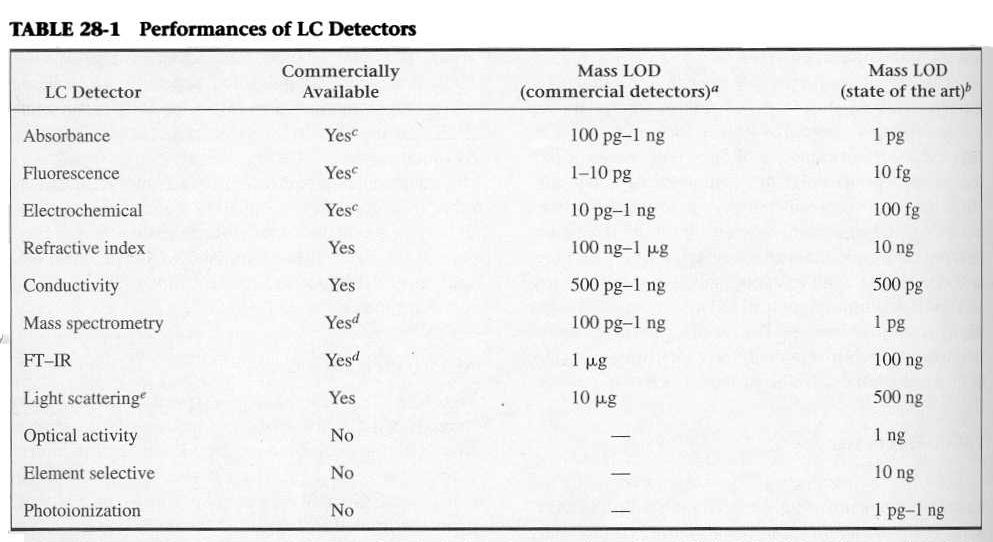
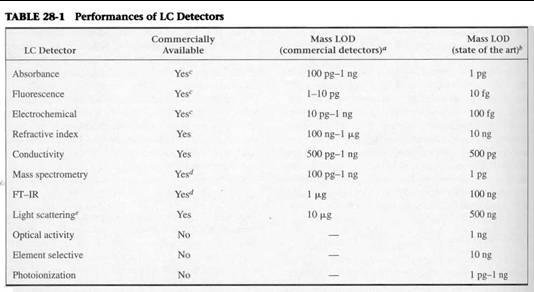
- Many HPLC detectors available
- For universal & selective detection
|
|
15
|
- Filter based UV-vis detector –
Typically set at 254 nm using the most prominent band
in Hg spectrum –
can also use 313, 365, 334
nm and other lines as well
- Variable wavelength detectors – use continuum source like (D2
or H2) & a monochromator, select any l, less sensitive
- PDA - D2 or H2 source, disperse & focus on
diode array, get complete spectrum every 1 sec, powerful, expensive,
less sensitive, lots of data generated
|
|
16
|
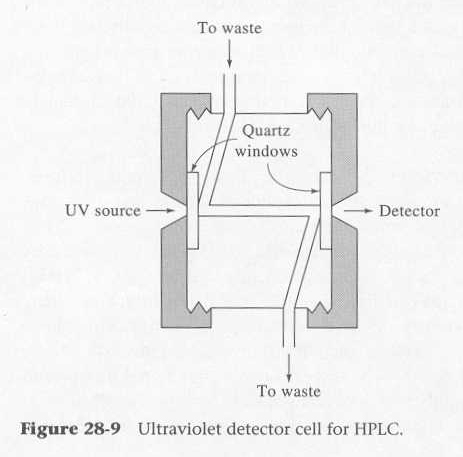
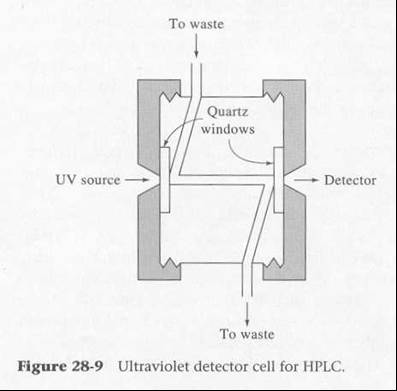
- Cell for UV-vis detector for HPLC
- - Low vol
|
|
17
|
|
|
18
|
- Fluorescence detector – normally fixed wavelength
filter fluorometer
excitation filter & emission filter can be changed for
particular l of interest gives
selectivity based on:
- - ability to exhibit fluorescence
- - excitation wavelength
- - emission wavelength
- Variable l monochromator based
fluorescence detectors also available
- Filter based detectors usually more sensitive
|
|
19
|
- Refractive index detector (RI) - responds to
nearly all solutes
but has poor sensitivity – detects changes in refractive
index as sample passes through as long as solute has different RI than
solvent – analogous to TCD in GC
|
|
20
|
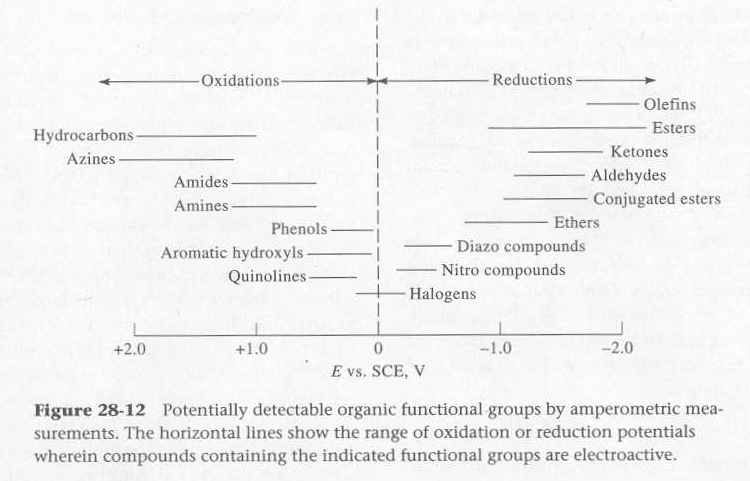
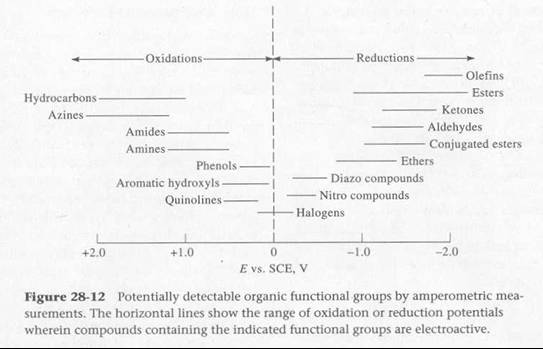
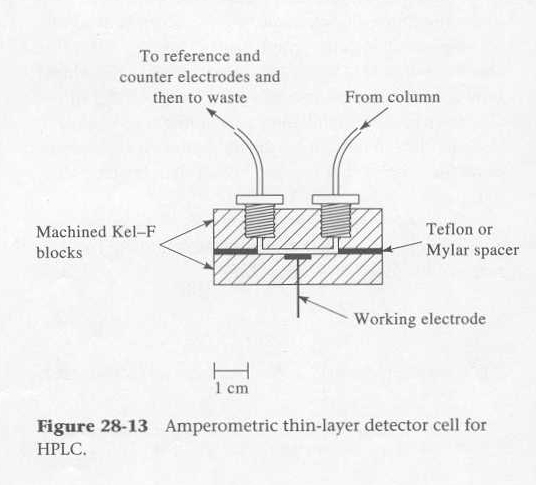
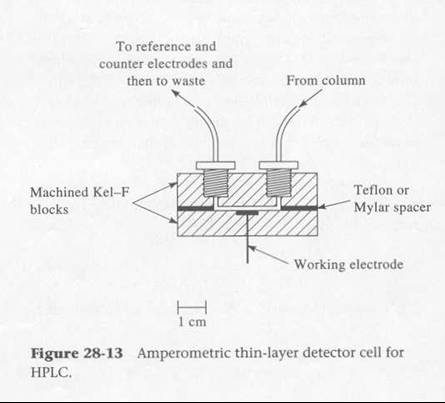
- Electrochemical Detection
- Amperometric – fix potential &
measure current (i)
- Conductometric – measure conductivity
- Coulometric – fix potential & integrate i
- Voltammetric – vary potential & measure i
- Potentiometric – measure potential
- Can use 2 or 3 electrode design with Pt or carbon electrodes (glassy C
or C paste)
- Electrochem. detector nearly
universal
|
|
21
|
|
|
22
|
|
|
23
|
- Other HPLC detectors
- LC-MS using thermospray – new popularity (pharmaceuticals)
- Evaporative light scattering - polymers
- LC-FTIR
- LC-plasma emission or ICP-MS
|

 Notes
Notes