|
1
|
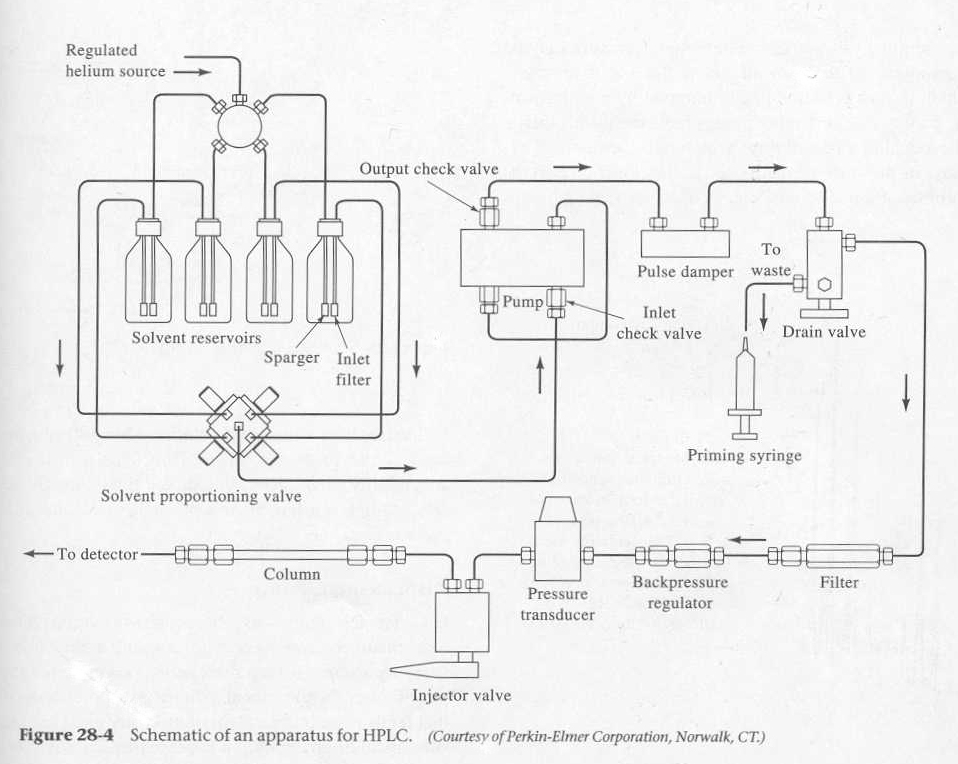
- Scope
- Instrumentation – eluants, injectors, columns
- Modes of HPLC
- Partition chromatography
- Adsorption chromatography
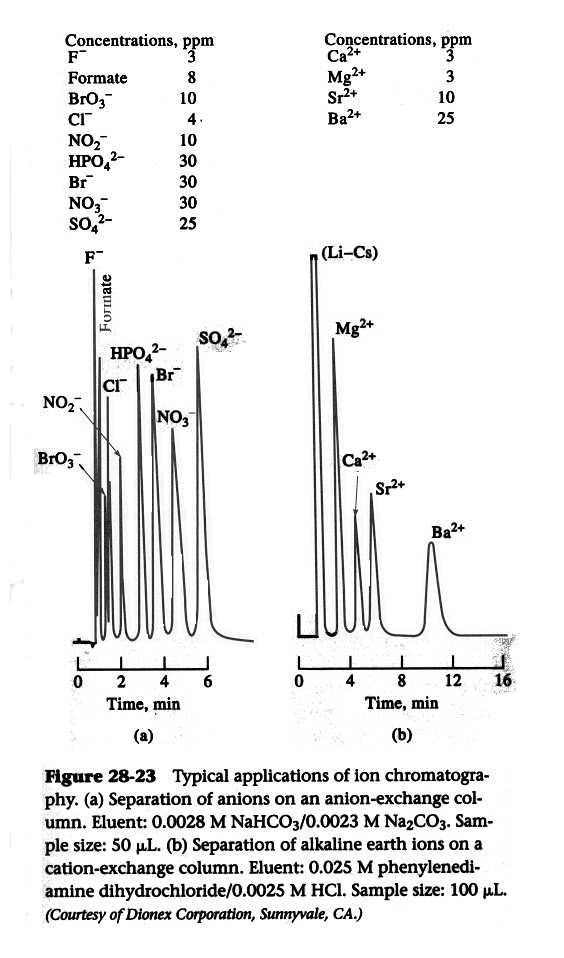
- Ion chromatography
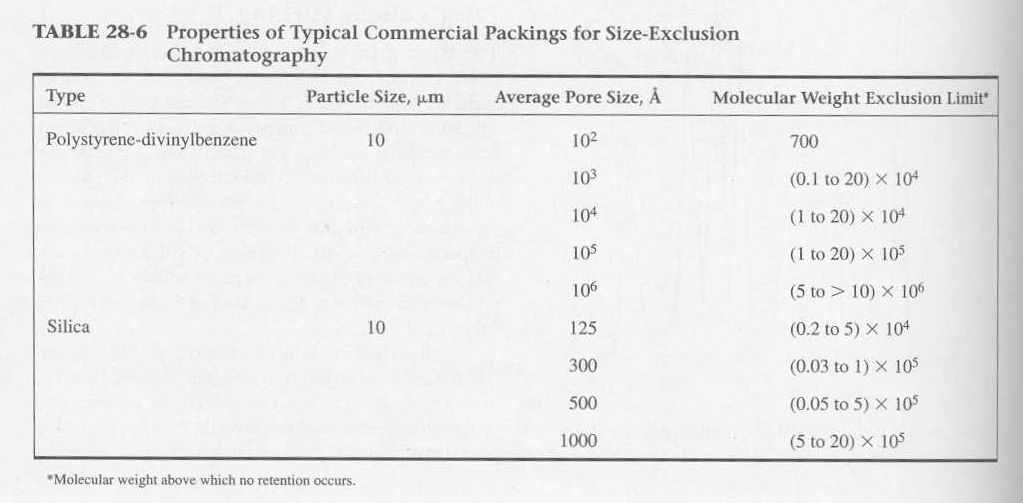
- Size exclusion chromatography
|
|
2
|
- HPLC
- Most widely used separation technique
- Broad applicability – organic & inorganic
- Can be very sensitive, accurate & precise
- Suitable for separation of nonvolatile species
- Has found numerous uses in industry, clinical settings, environmental
areas, pharmaceuticals, etc.
|
|
3
|
|
|
4
|
- Modes of Separation
- Partition Chromatography – most used form of
HPLC
primarily for nonionic compounds of varying polarity with low MW
(< 3000)
- Most common form is bonded phase chrom. using silica based packing
materials functionalized by silylation (as for GC)
|
|
5
|
- Early work with partition chrom. was done with
polar stationary phases
(like bare silica) & non- polar solutes = normal
phase chrom.
- Later bonded phases were introduced using C18 groups à very non-polar with polar
solvents = reversed-phase chromatography
- Today almost all partition chrom. done in reversed-phase mode with many
different bonded phases (although C18 very popular)
|
|
6
|
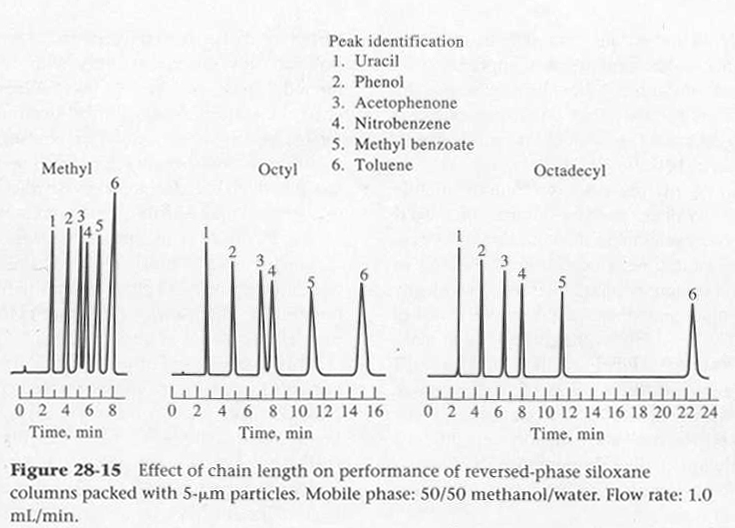
- -Si-CH2-(CH2)16-CH3 18 carbon chain
- Long chain acts as if it were an alkane coated on silica à analyte molecules partition
into it, hence the name
- In chromatogram, most polar compounds elute first because they partition
into C18 least – like dissolves like – most non-polar
compounds come out last
|
|
7
|
|
|
8
|
- Besides C18 can have C8, C4, C3, C2, C1
plus functionalities like
cyano (-C2H4CN), amino (-C2H4NH2), diol (-C3H6O-CH2-CHOHCH2OH)
- Each has different polarity
- Can also do Ion Pair Chromatography or Paired-Ion Chromatography – type
of RP-HPLC used to separate ionic species
- Still partition chrom. but use a reagent like a quaternary ammonium salt
(C4H9)4N+ to pair with
analyte ions to separate by RP
|
|
9
|
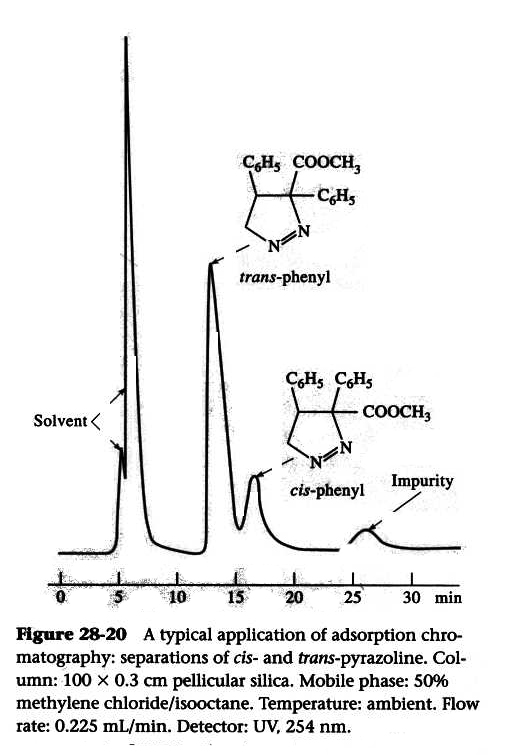
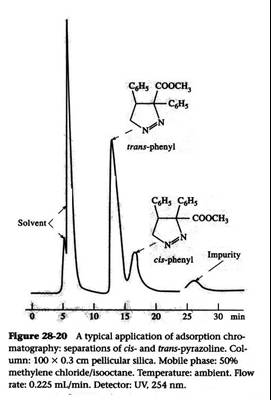
- Adsorption Chromatography – bare silica or alumina
to separate
non-polar compounds because they adsorb to the
stationary phase & are eluted by adjusting solvent strength of
mobile phase – important non-linear appl.
- Adsorption chrom. = normal phase chrom.
|
|
10
|
|
|
11
|
- Ion Chromatography (Ion Exchange)
- Historically was developed for the
- Manhattan Project (atomic bomb)
- Generally not automated because of the lack of good detectors until it
was reinvented in 1970’s at Dow Chemical using conductivity detection
& chemical suppression
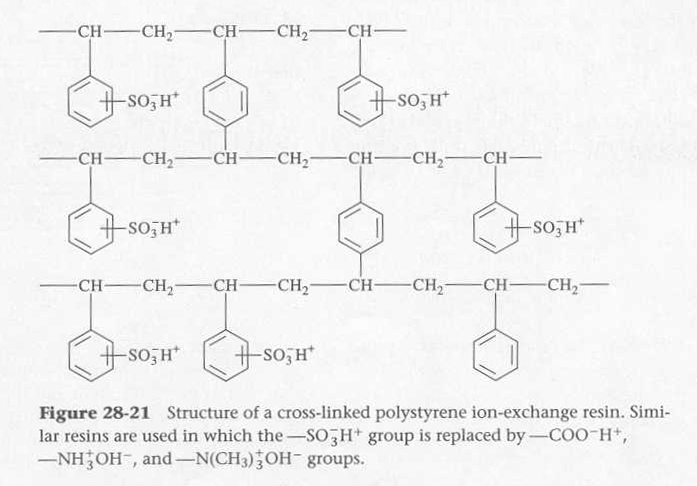
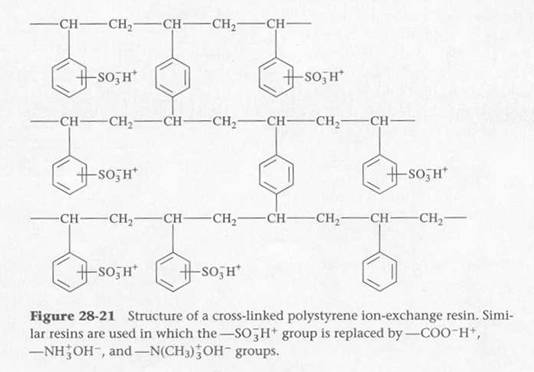
- Stationary phases are resin beads of styrene-divinylbenzene
functionalized with cationic & anionic groups developed for water
purification in 1930’s
|
|
12
|
- weak base strong base weak acid
|
|
13
|
- Can write reactions in general format
- xRSO3- H+ +
Mx+ (RSO3-)x
Mx+ + xH+
- solid solution solid solution
- Where R = polymer support (styrene divinylbenzene)
- Can write equilibrium expression for exchange
- [(RSO3-)x
Mx+]s [H+]xaq
- Kex =
----------------------------- tells affinity of
- [RSO3-
H+]xs [Mx+]xaq resin for M+
-
compare to H+
-
here or any ion
|
|
14
|
- Ion Exchange Process
- Analyte ions (Mx+) are passed thru column & retained on an
ion- exchange
site. The mobile phase contains
some H+ & this is increased sufficiently to cause exchange
with Mx+.
|
|
15
|
- Back to equilibrium expression
- [(RSO3-)x
Mx+]s [H+]xaq
- Kex =
-----------------------------
- [RSO3-
H+]xs [Mx+]xaq
- Rearrange to
- [RSO3- H+]xs [(RSO3-)x
Mx+]s
- ------------------ Kex =
---------------------
- [H+]xaq [Mx+]xaq
- During elution [H+] is high & [RSO3-
H+]s is high
- Left hand side of equation essentially constant
|
|
16
|
- [(RSO3-)x
Mx+]s Cs
- K =
---------------------
= -----
- [Mx+]xaq CM
- K turns out to be a distribution ratio (partition)
- Order of affinity for sulfonated cation exchange
- Tl+>Ag+>Cs+>Rb+>K+>NH4+>Na+>H+>Li+
- Ba2+>Pb2+>Sr2+>Ca2+>Ni2+>Cd2+>Cu2+>Co2+>Zn2+>Hg2+
|
|
17
|
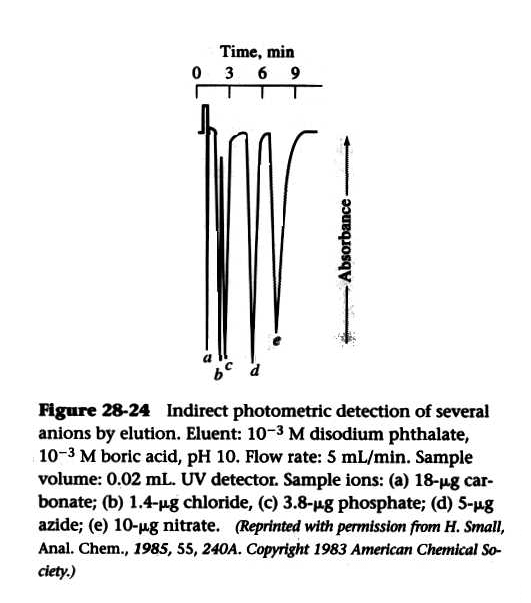
- Ion Chromatography Detection
- Basic detector is conductivity, but others are used such as
UV-vis &
atomic spectrometry (AA, AE) for metals
- Measure conductivity change in effluent when analyte passes through
- Problem – use high [H+] to elute small [Mx+] which
makes it difficult to detect [Mx+] conductivity on high
background of [H+]
- This problem hindered development of IC until the innovations made at
Dow in 70’s
|
|
18
|
|
|
19
|
- Several ways now available to solve the
conductivity problem
from background ions
- 1) Suppressor column – Dow researchers used a second ion exchange column
after the analytical column to neutralize the [H+] &
remove its conductivity so Mx+ can be easily detected (e.g.
if HCl is mobile phase use resin suppressor in OH- form R+OH-)
- H+Cl- + R+OH-S H+OH- +
R+Cl-S
|
|
20
|
- Suppressor columns must be regenerated
- 2) Single Column IC – no
suppressor column used, instead use low capacity analytical
column to keep mobile
phase concentration low & therefore the conductivity low – this is
coupled with the use of a special conductivity detector that can null
out high background of mobile phase without suppressing conductivity
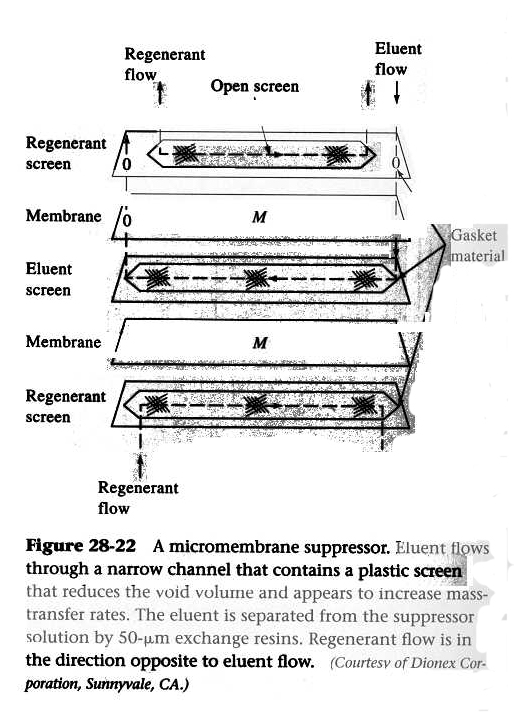
- 3) Other Suppressor Options – membrane, electrochemical, hollow fiber,
etc.
|
|
21
|
|
|
22
|
|
|
23
|
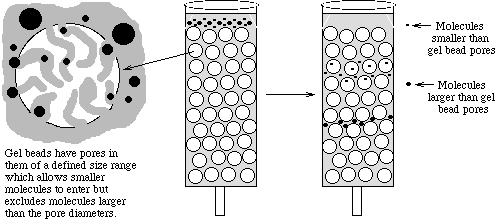
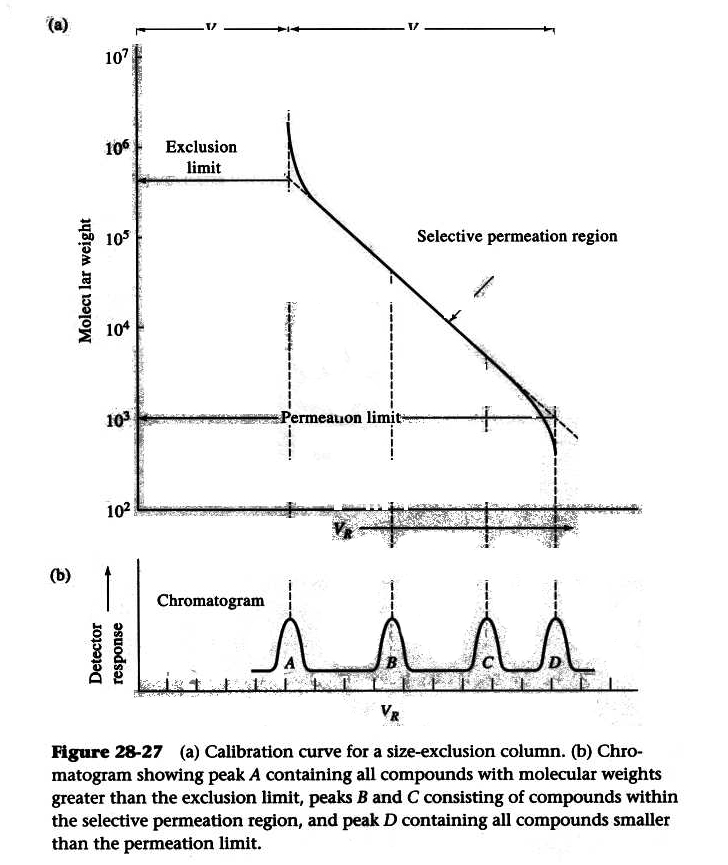
- Size Exclusion Chrom. (SEC)
- Packings are porous polymeric
(resins) or silica based materials
- Two names used for the same process:
- 1) Gel filtration chrom. = aqueous solvent
- Gel permeation chromatography = non-aqueous mobile phase
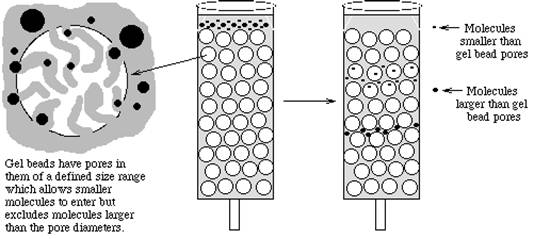
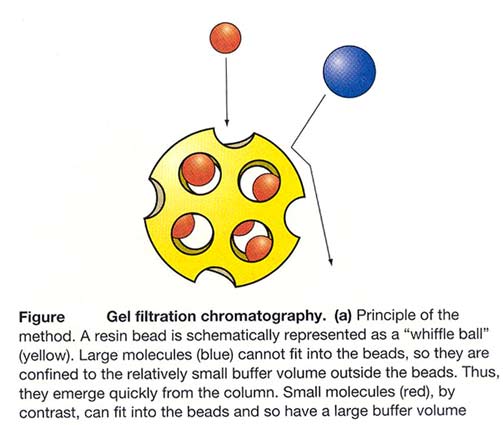
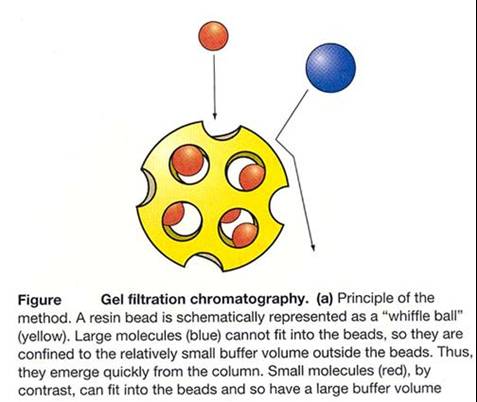
- Column packing works like a molecular filter allowing small molecules
access to every pore, retarding their progress – large molecules pass
thru more quickly
|
|
24
|
|
|
25
|
|
|
26
|
|
|
27
|
-
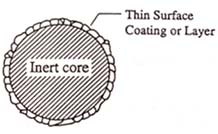
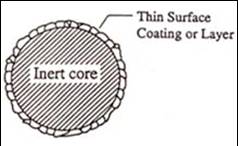
Polymeric SEC packing
can be thought of as
a ball of yarn with pores
defined by the degree
of crosslinking of the
polymer chains
|
|
28
|
|
|
29
|
|
|
30
|
|
|
31
|
|

 Notes
Notes