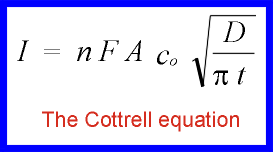
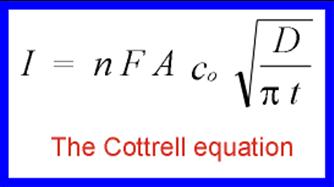
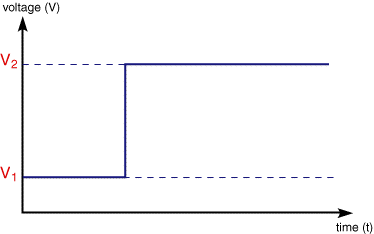
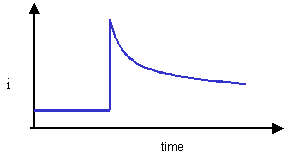
|
1
|
- Methods based on an electrolytic cell
- Apply potential or current to electrochemical cell & concentrations
change at electrode surface due to oxidation & reduction reactions
- Can have 2 or 3 electrodes
- Stirred or unstirred solution
- Measure current or voltage
|
|
2
|
- In all electrochemical methods, the rate of oxidation & reduction
depend on:
- 1) rate & means by which
soluble species reach electrode surface (mass transport)
- 2) kinetics of the electron
transfer process at electrode surface (electrode kinetics), which depend
on:
- a) nature of the reaction
- b) nature of electrode surface
- c) temperature
- (we don’t have much control over #2)
|
|
3
|
- Migration – movement of a charged
- particle in a potential field – generally bad
- (important for conductance & electrophoresis)
- In most cases migration is undesirable and can be eliminated by adding a
100 fold excess of an inert electrolyte (i.e., electrochemically inert –
not oxidized or reduced) Inert electrolyte does the migrating, not the
analyte
|
|
4
|
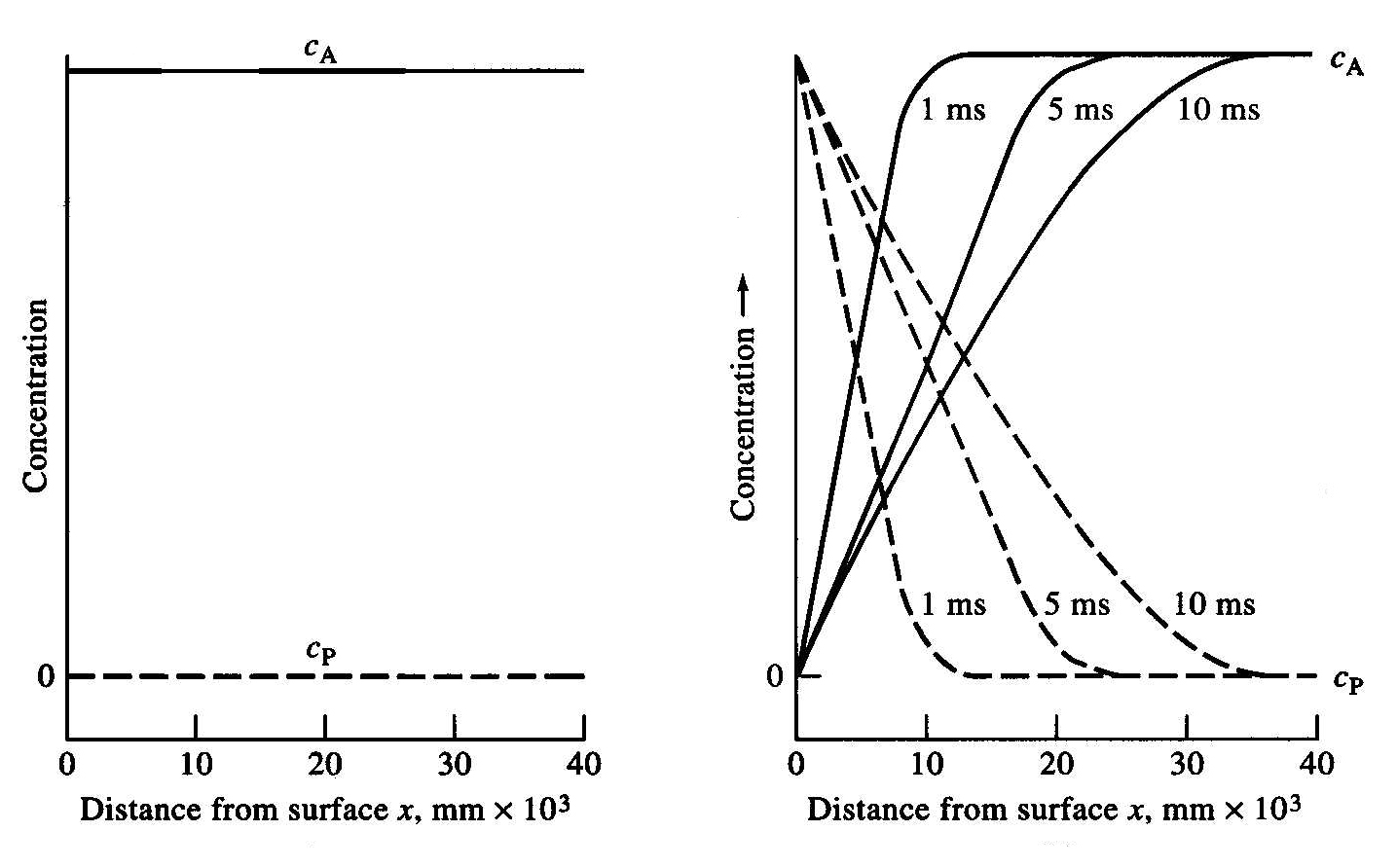
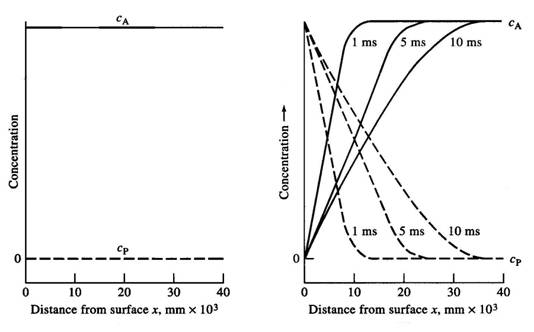
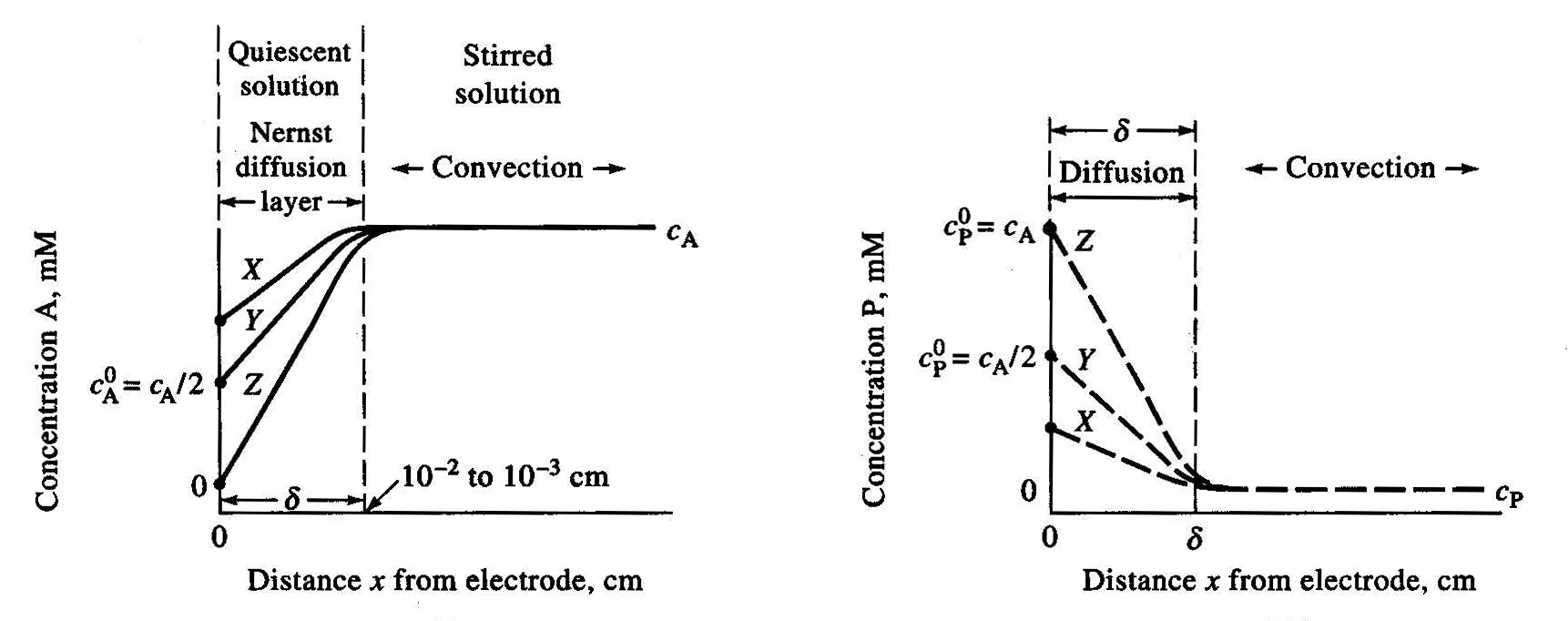
- 2) Diffusion – movement due to a concentration gradient. If electrochemical reaction depletes
(or produces) some species at the electrode surface, then a
concentration gradient develops and the electroactive species will tend
to diffuse from the bulk solution to the electrode (or from the
electrode out into the bulk solution)
|
|
5
|
|
|
6
|
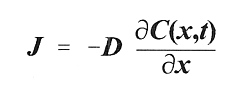
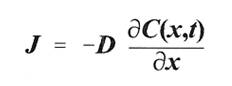
- 1st Law
- Where
- J = flux of material i.e., moles
passing a 1 cm2 plane at point x & time t (mol/cm2/sec)
- D = diffusion coefficient (cm2/sec)
- C = concentration
- t = time (sec) from when power is turned on
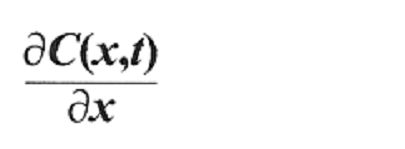
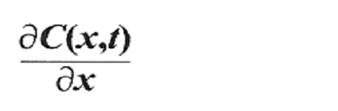
- x = distance from electrode surface (cm)
|
|
7
|
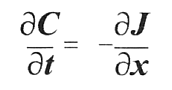
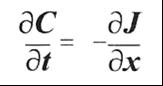
- Using an expression for Conservation of Mass
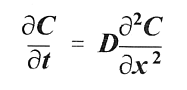
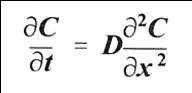
- And combining with Fick’s First law gives Fick’s Second Law
|
|
8
|
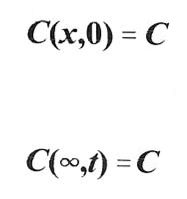
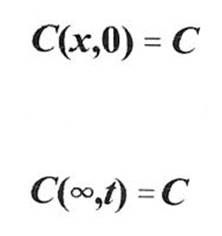
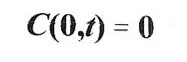
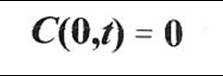
- Solving Fick’s Laws for particular applications like electrochemistry
involves establishing Initial Conditions and Boundary Conditions
|
|
9
|
|
|
10
|
|
|
11
|
|
|
12
|
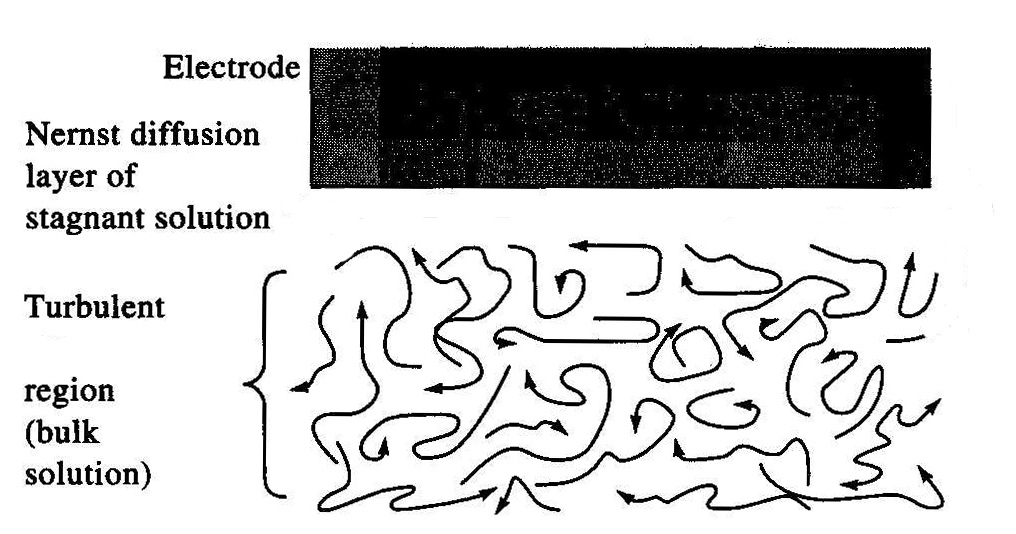
- Convection – mass transfer due to stirring. Achieved by some form of mechanical
movement of the solution or the electrode i.e., stir solution, rotate or
vibrate electrode
- Difficult to get perfect reproducibility with stirring, better to move
the electrode
- Convection is considerably more efficient than diffusion or migration =
higher currents for a given concentration = greater analytical
sensitivity
|
|
13
|
|
|
14
|
|
|
15
|
|
|
16
|
- Experimentally rate of electron transfer is fast for many processes so
can assume:
- - current depends only on mass transfer
- - surface concentrations are in equilibrium with applied potential as
expressed by the Nernst equation
- Processes which satisfy these assumptions are known as electrochemically
reversible
|
|
17
|
- A process may be reversible under one set of conditions and irreversible
under other conditions.
- Process is more likely to be irreversible if
- - it involves a high current
- - employs a rapid potential scan
- If a process is irreversible, then the rate of reaction at the electrode
surface (i.e., current) will be slower than predicted from mass transfer
considerations alone
|

 Notes
Notes