This course explores the role of the media in American politics and the role of politics in the American media.  We begin with a survey of theoretical approaches  to media analysis and mass communications. Then we focus on legal contests over the right to privacy and freedom of the press.  Next we look at instances of bad reporting and examine how media consolidation and the rise of prestige journalism have affected the news industry. Finally, by studying a few major stories and media issues in depth, we try to gain a better understanding of the factors involved in the conversion of events and developments into seemingly significant news. 


Since this is the first hybrid course offered at UML, we'll work together to determine how to maximize the advantages of mixing online communications with face-to-face meetings.   We will not have chat sessions or meet online at any specific time, but you will have to submit answers to weekly reading questions via email by the dates specified below. 

  More information about course requirements 


1. An Overview of a Few Major Themes in Media Studies

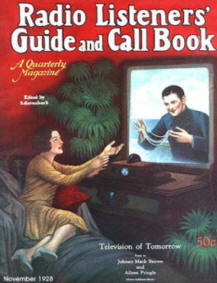
  1. Timeline of the development of communications technology  

  2. Inventing History, CBS News Interactive

  3. Willing Partners: Politicians And The Media, a timeline created by DiscoveryTimes.

  4. Theodor Adorno and Max Horkheimer, "The Culture Industry: Enlightenment as Mass Deception," from Dialectic of Enlightenment, 1944.

  5. George Orwell, "Politics and the English Language" (London: Horizon, 1946).

  6. Marshall McLuhan, excerpt from "Classroom Without Walls," Explorations in Communication (Boston: Beacon Press, 1960) (Browse through collected quotes.)

  7. Michel Peillon, Lecture 3: Daniel Bell, The Cultural Contradictions of Capitalism (Theories of Modernity, a course offered by The Sociology Department of the National University of Ireland at Maynooth).

  8. David A. Schultz, "The Cultural Contradictions of the American Media," excerpt from Chapter Two, It's Show Time: Media, Politics, and Popular Culture (New York: Peter Lang, 2000).

  9. Larry Press, "McLuhan Meets the Net," Communications of the ACM, Vol 38, No 7, July, 1995, pp 15-20.

  10. David Gauntlett, “Media Effects,” www.theory.org.uk. (Browse links.)

  11. Jean Baudrillard, "On the Murderous Capacity of Images.

 Reading questions


2. Public v. Private: Legal, Technological, and Cultural Issues

  1. Associated Press, 150 years of the Associated Press, 1848-1998. (Browse links.)

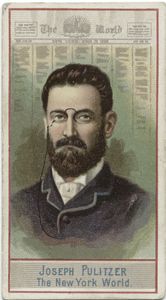
  2. W. Joseph Campell, "What's Good about Yellow Journalism?."

  3. Joe Saltzman, "Sob Sisters: The Image of the Female Journalist in Popular Culture," The Image of the Journalist in Popular Culture, a project sponsored by the Norman Lear Center at the Annenberg School for Communication.

  4. Samuel Warren and Louis Brandeis, "The Right to Privacy," Harvard Law Review, Volume IV, No. 5, December 1890.

  5. Susan E. Gallagher, "A Man's Home: Rethinking the Public/Private Dichotomy in American Law," an essay based on materials for Don't Look Now: A Multimedia History of Ideas about Privacy in the U.S.

  6. Randall P. Bezanson, "The Right to Privacy Revisited: Privacy, News, and Social Change, 1890-1990," California Law Review, 80 (October, 1992).

  7. Olmstead v. United States (1928)

  8. Times v. Sullivan (1964)

 Reading questions


3. Media & Politics in the Age of Screens

  1. American Television in the 1950's (Browse links.)

  2. Susan E. Gallagher, "The Personal Is Political.  Now What?."

  3. The Rundown: Reporting on Local Television News Since 1981 (Browse links.)

  4. The Living Room Candidate: Presidential Campaign Commercials, 1952-2004, The American Museum of the Moving Image (Browse links.)

  5. Mark Steyn, "Feelings, nothing more than….: how TV sentimentalizes life & trivalizes politics," American Enterprise Online, Sept-Oct, 1997.

  6. Executive Summary, "Political Influentials Online in the 2004 Presidential Campaign," Institute for Politics, Democracy, and the Internet, George Washington University.

  7. "Peeping Toms Get New Tool: Phone Cams a Privacy Issue," The Early Show, CBS News, May 27, 2004.  (Browse links to related stories.)

Assignment:  Write a summary (one page) of one of the campaign commercials featured on The Living Room Candidate or of another commercial for or against one of the candidates in the ongoing presidential race.   Try to ascertain the truth or falsity of the commercial by using the Internet to obtain specific information that either confirms or contradicts the claims made in the ad.


4. Media Bias, Fabrication and Spin: Case Studies and Analysis

Case studies in bad journalism:

Keep in Mind:

You'll see that one of the problems that all of the reporters criticized in this section have in common was that they failed to describe accurately the sources of their stories.  In some cases, this failure was part of a deliberate effort to pass off fabrications as fact.  In others, the failure to identify sources properly reflected an effort to exaggerate the significance of certain details in order to increase the overall impact of the story.  In all of these cases, however, the distortions arose, not from any specific political or ideological bias, but from the reporters' personal ambitions.  Likewise, the editors who failed to detect or tried to cover up these problems were apparently driven, not by any political agenda, but by the desire to outdo other news outlets and/or to protect the public image of their employers.

Understanding the role that personal or corporate self-interest plays in news coverage allows us to see that "spin" is frequently not a function of liberal or conservative bias, but instead reflects the intensely competitive culture of the media industry.  Moreover, in our time, the goal of the competition is frequently not simply to get the news out first, but to win a specific journalism award.  Thus, when you read a significant news story, and notice that the writer is trying especially hard to make a splash, note that the piece may have been deliberately conceived as an entry for a specific prize.  In fact, once you start paying attention to this aspect of media coverage, you'll see that many prominently placed stories are not designed to inform the public or to convey any insight into political developments or social issues.  Instead, these stories are carefully formulated to appeal to the juries that give out specific awards. 

As you read these somewhat informal and "insiderish" pieces, also keep track of

  • What happened to the journalists who got caught distorting the news.

  • The tendency among journalism critics to dismiss fabricators as anomalous "bad apples."

  • The way in which editors' desire to "seem fair" ends up twisting the facts.

  1. "Janet Cooke and Jimmy's World," Museum of Hoaxes.

  2. Peter Carbonara, "Confabulation crisis...a scandal at the Globe raises questions about standards for columnists," Salon.com, June 26, 1998.

  3. Michael Kinsley, "Glass Dismissed," Slate, Sunday, May 17, 1998, 12:00 AM PT 

  4. Jack Shafer, The Jayson Blair Project: How did he bamboozle the New York Times?, Slate Magazine, May 8, 2003.

  5. Susan E. Gallagher, "Flood the Zone with Innuendo: Walter V. Robinson's Approach to the News,"

  6. excerpt from a blog on media coverage of the scandal in the Catholic Church.
  7. Amy Alexander, "Reading Between the Lines: Who's Sorry Now?," BlackWorld, March 22, 2004.

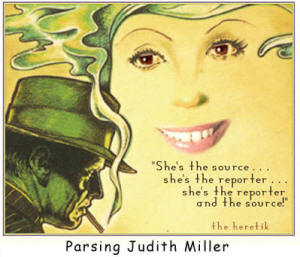
  8. Franklin Foer, The Source of the Trouble, New York Metro, June 7, 2004.

Wider views of what's wrong with the American press:

  1. A Guide to Liberal Media Bias, www.mediaresearch.org. (Browse links.)

  2. David Croteau, "Examining the "Liberal Media" Claim," Fairness and Accuracy in Reporting (www.fair.org), 1998.

  3. Eric Alter, "The Truth About Bias and the News," Cursor (Introduction to Eric Alter, What Liberal Media? (New York: Basic Books, 2003).

  4. Mark Crispin Miller, "What's Wrong with This Picture?," The Nation, January 2002.

 Reading questions


Go to Main Course Page