Research highlights
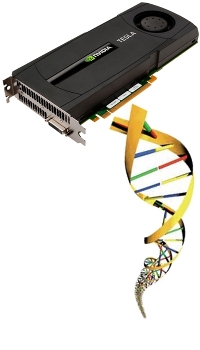
Our research objectives are to advance both conceptual and microscopic understanding of biomolecular interactions, including protein-protein, protein-DNA, and ligand-receptor interactions, using theoretical approaches and computer simulations, and to understand the role of these interactions in diverse biological processes from formation and dissociation of biomolecular complexes and aggregates to mechano-chemical signal transduction in cell-adhesion systems, to functions of long protein fibers, to membrane fusion, and to viral infectivity of cells. To achieve these goals, we develop and use new theoretical approaches, including theoretical models and statistical data analyses, and advanced computational methodology (numerical algorithms and tools) for molecular simulations of biochemical and biological systems on graphics processors, or Graphics Processing Units (GPUs), and on combined CPU-GPU platforms. Contemporary GPUs allow us to speedup simulations 10-250-fold, depending on the system size, as compared with heavily tuned implementations of the simulation algorithms on a CPU. We use the GPU-based acceleration to energize computational exploration of large-size biological systems, and to attain the experimentally relevant timescale. Current state of the art experiments on single molecules, which include, e.g., FRET, and AFM and laser-tweezer-based dynamic force spectroscopy among many others, enable researchers to go beyound the ensemble averaged picture and to analyze the entire distributions of the relevant biomolecular characteristics. We strive to describe the biomolecular processes and biological systems under the experimentally and physiologically relevant conditions. We collaborate with experimental groups, wherever possible, to relate the simulation output with the experimental results, and to provide meaningful interpretation of the experimental data.
Recent publications
- A. Zhmurov, A. Protopopova, R. I. Litvinov, P. Zhukov, J. W. Weisel, and V. Barsegov, “Structural basis of interfacial flexibility in fibrin oligomers,” accepted to Structure [PDF]
- J. Snijder, O. Kononova, I. M. Barbu, C. Uetrecht, W. F. Rurup, R. J. Burnley, M. S. T. Koay, J. J. L. M. Cornelissen, W. H. Roos, V. Barsegov, G. J. L. Wuite, A. J. R. Heck, "Assembly and Mechanical Properties of the Cargo-Free and Cargo-Loaded Bacterial Nanocompartment Encapsulin", Biomacromolecules, 17, 2522-2529 (2016) [PDF]
- A. Alekseenko, O. Kononova, Y. Kholodov, K. A. Marx, and V. Barsegov, "SOP‐GPU: influence of solvent‐induced hydrodynamic interactions on dynamic structural transitions in protein assemblies", J. Comput. Chem., 37, 1537-1551 (2016) [PDF]
- O. Kononova, J. Snijder, Y. Kholodov, K. A. Marx, G. J. L. Wuite, W. H. Roos, V. Barsegov, "Fluctuating Nonlinear Spring Model of Mechanical Deformation of Biological Particles", PLoS Comput. Biol., 12, e1004729 (2016) [PDF]
- O. Kononova, Y. Kholodov, K. E. Theisen, K. A. Marx, R. I. Dima, F. I. Ataullakhanov, E. L. Grishchuk and V. Barsegov, "Tubulin bond energies and microtubule biomechanics determined from nanoindentation in silico", J. Am. Chem. Soc., 136, 17036-17045 (2014) [PDF]
- O. Kononova, J. Snijder, M. Brasch, J. Cornelissen, R. I. Dima, K. A Marx, G. J. L. Wuite, W. H. Roos and V. Barsegov, "Structural transitions and energy landscape for cowpea chlorotic mottle virus capsid mechanics from nanomanipulation in vitro and in silico", Biophys. J., 105, 1893-1903 (2013) [PDF]
- O. Kononova, L. Jones and V. Barsegov, "Order statistics inference for describing topological coupling and mechanical symmetry breaking in multidomain proteins", J. Chem. Phys., 139, 121913 (2013) [PDF]
- A. Zhmurov, O. Kononova, R. I. Litvinov, R. I. Dima, V. Barsegov and J. W. Weisel, "Mechanical transition from α-helical coiled coils to β-sheets in fibrin(ogen)", J. Am. Chem. Soc., 134, 20396-20402 (2012) [PDF]
- R. I. Litvinov, A. Mekler, H. Shuman, J. S. Bennett, V. Barsegov, and J. W. Weisel, “Resolving two-dimensional kinetics of receptor-ligand interactions using Binding- Unbinding Correlation Spectroscopy”, Journal of Biological Chemistry, 287, 35272-35285 (2012) [PDF]
- A. Zhmurov, K. Rybnikov, Y. Kholodov, and V. Barsegov, "Generation of random numbers on graphics processors: Forced indentation in silico of the bacteriophage HK97", J. Phys. Chem. B, 115, 5278-5288 (2011) [PDF]
- A. Zhmurov, R. I. Dima, Y. Kholodov, and V. Barsegov, "SOP-GPU: Accelerating biomolecular simulations in the centisecond timescale using graphics processors", Proteins, 78, 2984-2999 (2010) [PDF]
- A. Zhmurov, R. I. Dima, and V. Barsegov, "Order Statistics theory of unfolding of multimeric proteins, "Biophys. J., 99, 1959-1268 (2010) [PDF]
|